
Archive
Tagcloud
Lightening the Load: Rethinking Floor Preparation with Self-Leveling Underlayments
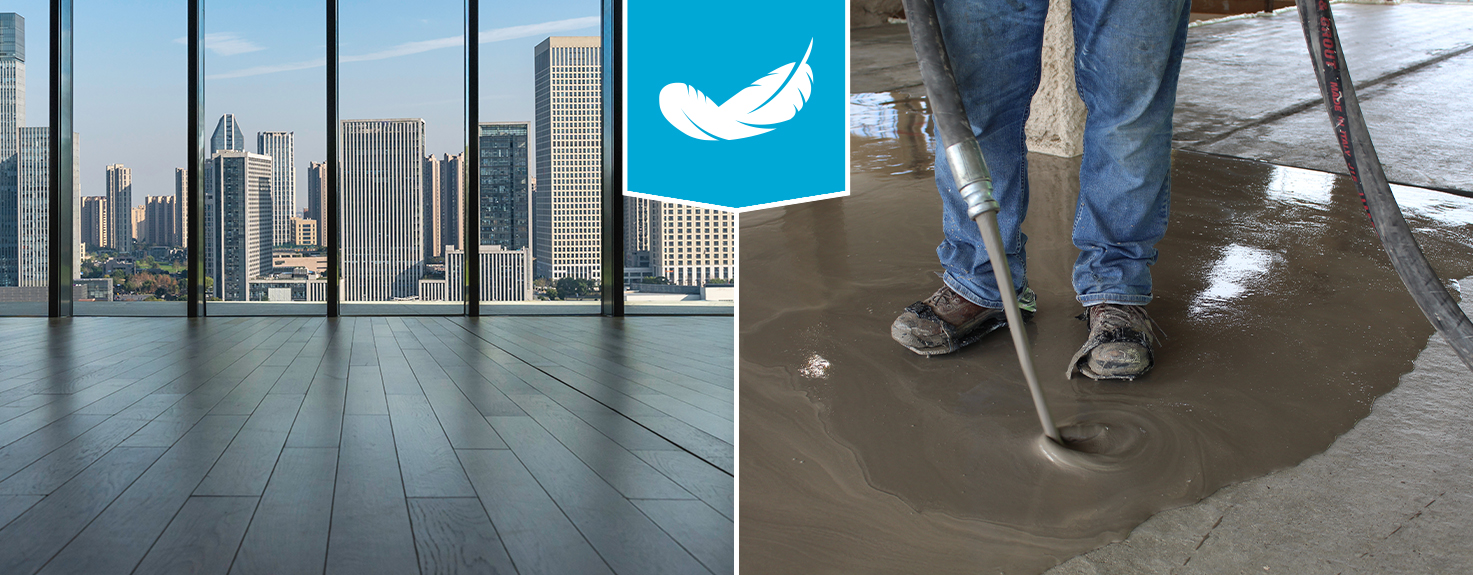
Architects and specifiers are increasingly being tasked with taking aging office towers and turning them into apartments, restoring historic landmarks, or redesigning vacant commercial spaces to meet changing market demands. This trend is particularly evident across the Northeast, United States, where renovation and adaptive reuse are giving existing buildings a new purpose.
Beyond the aesthetic and economic benefits, these projects can have a meaningful environmental impact. According to the U.S. Environmental Protection Agency, the energy required to demolish and replace an existing building can take decades to recover, even with a highly efficient new structure. By renovating rather than rebuilding, owners can reduce embodied carbon, conserve resources, and extend the life of existing buildings.
But transforming an existing building often starts from the ground up, with floor preparation playing an important role in adapting spaces for their next use.
Working Within Existing Buildings
Every structure has its own history, from aging substrates and uneven floors to unknown moisture issues and previous repairs hidden beneath the surface. Unlike new construction, renovation projects must account for these existing conditions, which can influence product selection, surface preparation, installation methods, and other decisions throughout the project.
Evaluating the building early in the planning process helps project teams understand what they are working with before installation begins. Substrate testing, moisture assessment, evaluation of the existing assembly, and a review of structural limitations can reveal potential issues and inform the floor preparation approach. This early assessment helps ensure that the selected system is compatible with actual site conditions.
The Importance of Material Selection
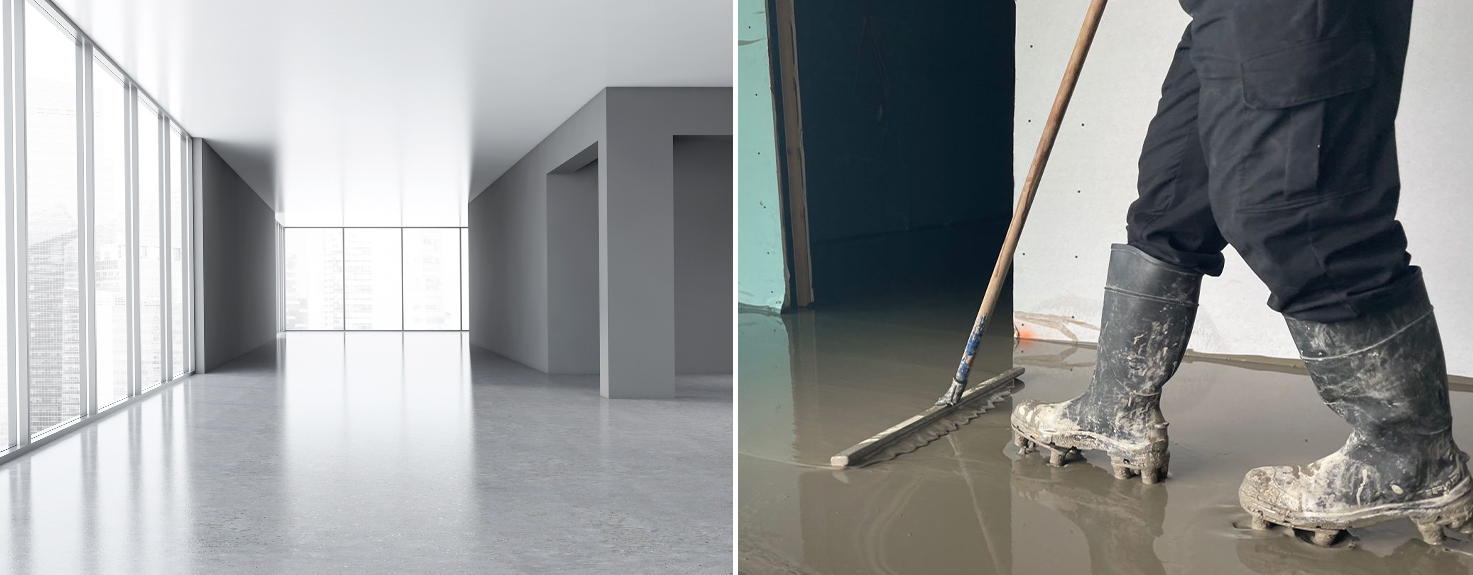
Once existing conditions are understood, material selection becomes less about choosing a product in isolation and more about finding a solution that fits the project. For floor preparation, that means considering more than whether or not a material can create a flat surface.
Installers must consider compressive strength, required thickness or limitations, flexural strength, flatness, and ability to bond to the existing substrate, which all influence how a material will perform once installed.
While longevity and durability are crucial, renovation projects also require teams to consider how efficiently the material can be installed, how quickly the floor can return to service, and how much additional weight the assembly can accommodate. In occupied buildings, fast-setting materials that allow flooring installation sooner can also minimize downtime and keep other trades moving. For owners and developers, this speedier construction can translate to a faster path to occupancy and bring the project closer to generating revenue sooner.
The weight of floor assembly materials is another consideration because every added layer contributes dead load to framing and foundations that were potentially designed decades ago. Lightweight, thin-profile materials can help limit that added burden while maintaining the performance required for the finished floor. Coordination with the structural engineer early in the process can help ensure the selected system safely remains within the building's limitations.
Lightweight underlayments can be particularly useful in renovations where the existing structure has limitations on how much additional weight it can accommodate. This can be especially important in historic buildings, where older structural systems may limit added dead load, particularly when thicker pours are needed to correct uneven floors.
Weight can also become a consideration in high-rise renovations and adaptive reuse projects, where underlayment may be installed across large areas or multiple floors. Selecting a lightweight SLU can help reduce the added weight of the floor assembly while still addressing flatness and elevation requirements. Early coordination with the structural engineer can help determine where reducing material weight may benefit the project.
A weight-sensitive renovation at Dartmouth College illustrates this challenge. In spring 2025, Dartmouth College renovated the Berry Sports Center on its Hanover, New Hampshire campus. Allegheny Contract Flooring selected NXT® Level Plus Lite to create a smooth, level surface while helping the project remain within the structure’s specified weight limits.
“Allegheny mixed and pumped NXT Level Plus Lite using our SUPERCAP® pump truck,” said Greg Enamorado of Allegheny Contract Flooring. “The material flowed and placed easily, then cured quickly to provide a smooth, flat finish for the sports complex. The lightweight formulation helped us remain below the specified pounds-per-square-foot limit.”
How NXT® Level Plus Lite Supports Lightweight Floor Preparation
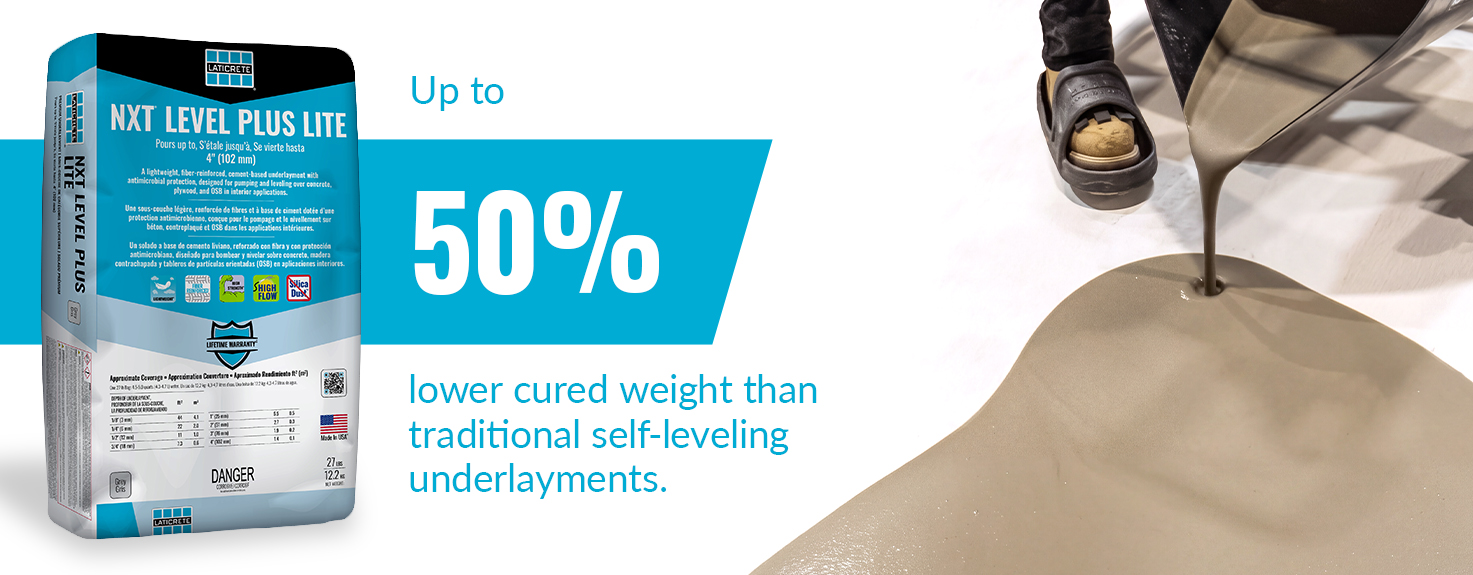
NXT Level Plus Lite from LATICRETE is a lightweight, fiber-reinforced self-leveling underlayment designed for projects where structural weight is a key consideration. With a cured weight up to 50% lower than traditional self-leveling underlayments. It delivers high flexural strength without requiring metal lath. Plus, its high compressive strength is designed to handle heavy traffic and loads common in multifamily, mixed use, and commercial spaces.
The formulation also provides a versatile option for floor preparation across multiple substrates, including plywood, OSB, gypsum, and concrete before the application of a floor covering.
NXT Level Plus Lite can be applied in a single step without the need for a cap layer, delivering a smooth, flat, and durable surface ready for floor covering in as little as 24 hours. It is also designed to improve jobsite handling, with packaging that weighs 50% less than traditional self-leveling underlayments. For installers, the product offers an added safety benefit, containing no respirable crystalline silica at levels above the OSHA action level.
These characteristics make NXT Level Plus Lite particularly suited for renovation and adaptive reuse projects where teams need to balance floor performance with existing structural limitations. Applications include office-to-residential conversions, historic restorations, multifamily and mixed-use redevelopment, commercial, hospitality, or educational renovations.
A Practical Approach to Existing Floor Preparation
Every renovation project brings its own set of existing conditions, and those conditions can shape decisions long before the finished floor is installed. As the industry continues to look for ways to reduce carbon footprints and extend the life of existing structures, construction crews need materials that can adapt to the realities of renovations.
Lightweight floor preparation solutions like NXT Level Plus Lite give installers another useful tool for navigating the challenges of a retrofit, particularly when material weight is a concern. By evaluating weight alongside substrate conditions, structural requirements, installation efficiency, and long-term performance, project teams can make more informed decisions for complex renovation and adaptive reuse projects.
For these projects, successful floor preparation starts with understanding what is already there, then selecting a solution that works within those conditions to deliver an integrated, long-lasting system.