
Archive
Tagcloud
Type 1L Concrete Is Changing the Industry. Your Installation Process Doesn't Have To.
Written by: Aaron Abbott, Senior Technical Product Manager
For decades, flooring installers could make certain assumptions about a newly placed concrete slab. The concrete might vary from project to project, but the underlying cement chemistry was generally familiar, predictable, and well understood.
That is changing.
Across North America, ready-mix suppliers, contractors, and project owners have been adopting Portland Limestone Cement (PLC), commonly identified as Type 1L cement. As the construction industry works to lower embodied carbon and reduce the environmental impact of concrete production, Type 1L concrete has become an alternative to traditional Portland cement systems.
The sustainability benefits are significant. However, some flooring, tile, and substrate preparation professionals are finding that concrete made with Type 1L cement may exhibit different surface characteristics than traditional Type I/II concrete, particularly in applications where substrate preparation, moisture mitigation, self-leveling underlayments, and bonded flooring systems rely on predictable surface performance.
The good news is that the solution is not to avoid Type 1L concrete. The solution is to understand it.
At LATICRETE, we have spent more than two decades developing substrate preparation methods, moisture mitigation technologies, primers, and self-leveling underlayments specifically designed to address real-world slab variability.
Whether a slab was produced using traditional Portland cement or the latest Type 1L mix designs, the path to a successful flooring installation remains the same: evaluate the substrate, prepare it correctly, and select proven systems designed to manage variation.
Why Type 1L Concrete Is Becoming the New Normal
Portland Limestone Cement is defined by ASTM C595 as a blended hydraulic cement in which a portion of traditional Portland cement clinker is replaced with finely ground limestone. In many applications, up to approximately 15% of the cement may consist of limestone.
The primary driver behind Type 1L adoption is sustainability. By reducing clinker content, manufacturers can lower carbon emissions associated with cement production while still producing concrete that meets structural performance requirements.
As a result, Type 1L concrete is increasingly specified for commercial buildings, warehouses, multifamily construction, healthcare facilities, educational campuses, airports, and other large-scale projects.
What Flooring Contractors Are Seeing in the Field
One of the key observations identified in LATICRETE Technical Data Sheet 299 is that Type 1L concrete can exhibit different near-surface characteristics depending on mix design, finishing practices, curing procedures, and environmental conditions.
Possible field conditions include softer or weaker surface zones, variable surface absorption, temperature-sensitive setting characteristics, increased cracking potential, and greater sensitivity to finishing practices.
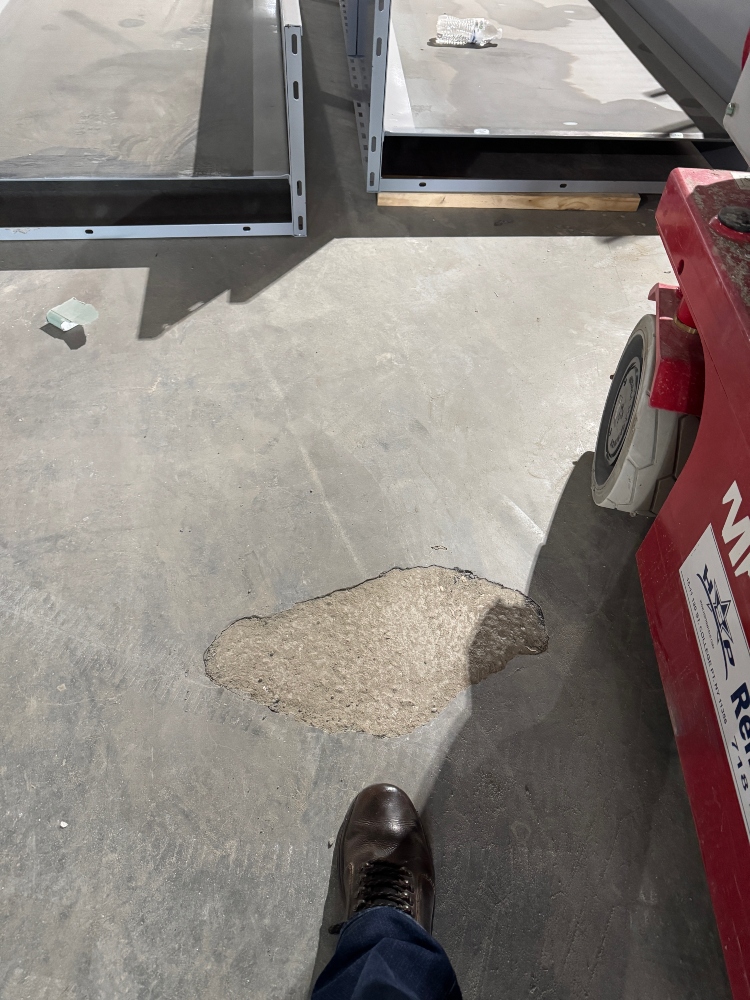
Not every Type 1L slab will exhibit these characteristics. However, installers should verify actual field conditions rather than rely on assumptions based solely on mix design or specified compressive strength.
The Real Issue Isn't the Cement. It's the Surface
When flooring failures occur, the root cause is often blamed on concrete mix design. In reality, the flooring system interacts almost entirely with the slab surface and immediate near-surface zone.
That is why LATICRETE approaches substrate preparation through measurable performance criteria rather than assumptions about concrete chemistry.
A Proven Analytical Approach to Substrate Preparation
Long before the industry began adopting Type 1L concrete, LATICRETE developed substrate assessment procedures focused on evaluating actual field conditions rather than assumed conditions.
The methodology outlined in LATICRETE Technical Data Sheet 230 remains one of the industry's most comprehensive approaches to substrate evaluation and preparation, providing practical tools to classify surfaces and determine the preparation methods required for successful installation.
Using analytical methods such as moisture testing, water-drop testing, mechanical preparation evaluation, and tensile pull-off testing allows installers to make decisions based on measurable performance criteria instead of assumptions.
Moisture Testing Matters More Than Ever
Moisture remains one of the most significant variables affecting flooring installations regardless of cement type. Whether a project utilizes traditional Portland cement or Type 1L concrete, moisture test results, not project schedules, should drive installation decisions.
Proper testing helps identify risk before flooring materials are installed and allows the appropriate mitigation strategy to be selected when necessary.
The Role of Tensile Pull-Off Strength Testing
Traditional compressive strength results tell only part of the story. Tensile pull-off testing evaluates the actual surface that must support primers, moisture mitigation systems, self-leveling underlayments, adhesives, and finished flooring materials.
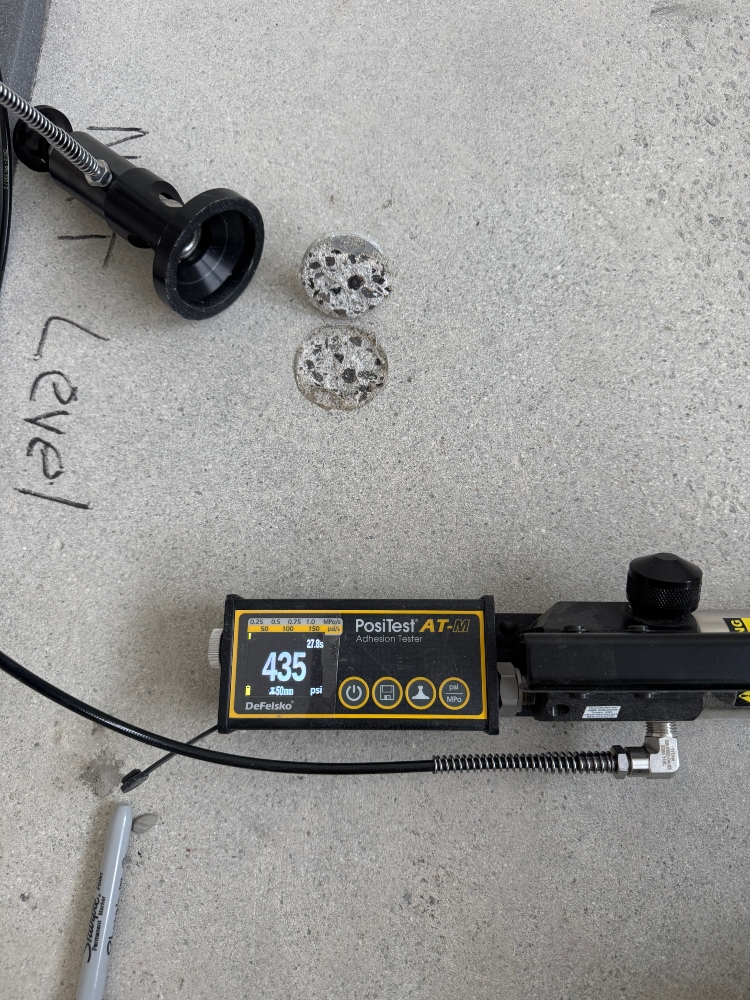
TDS 230 recommends testing in accordance with ASTM C1583 to quantify surface strength and verify suitability for installation.
When testing indicates a weak surface layer, additional mechanical preparation can often remove the affected material and expose a stronger substrate.
When Mechanical Surface Preparation Is Critical
Weak surface layers, laitance, curing compounds, contaminants, sealers, adhesive residue, and poorly bonded concrete must be removed through mechanical means such as shot blasting, grinding, and scarifying.
Proper surface preparation helps create a clean, sound, and uniform substrate, improving the potential for consistent bond performance.
Self-Leveling Underlayments Designed for Real Jobsite Conditions
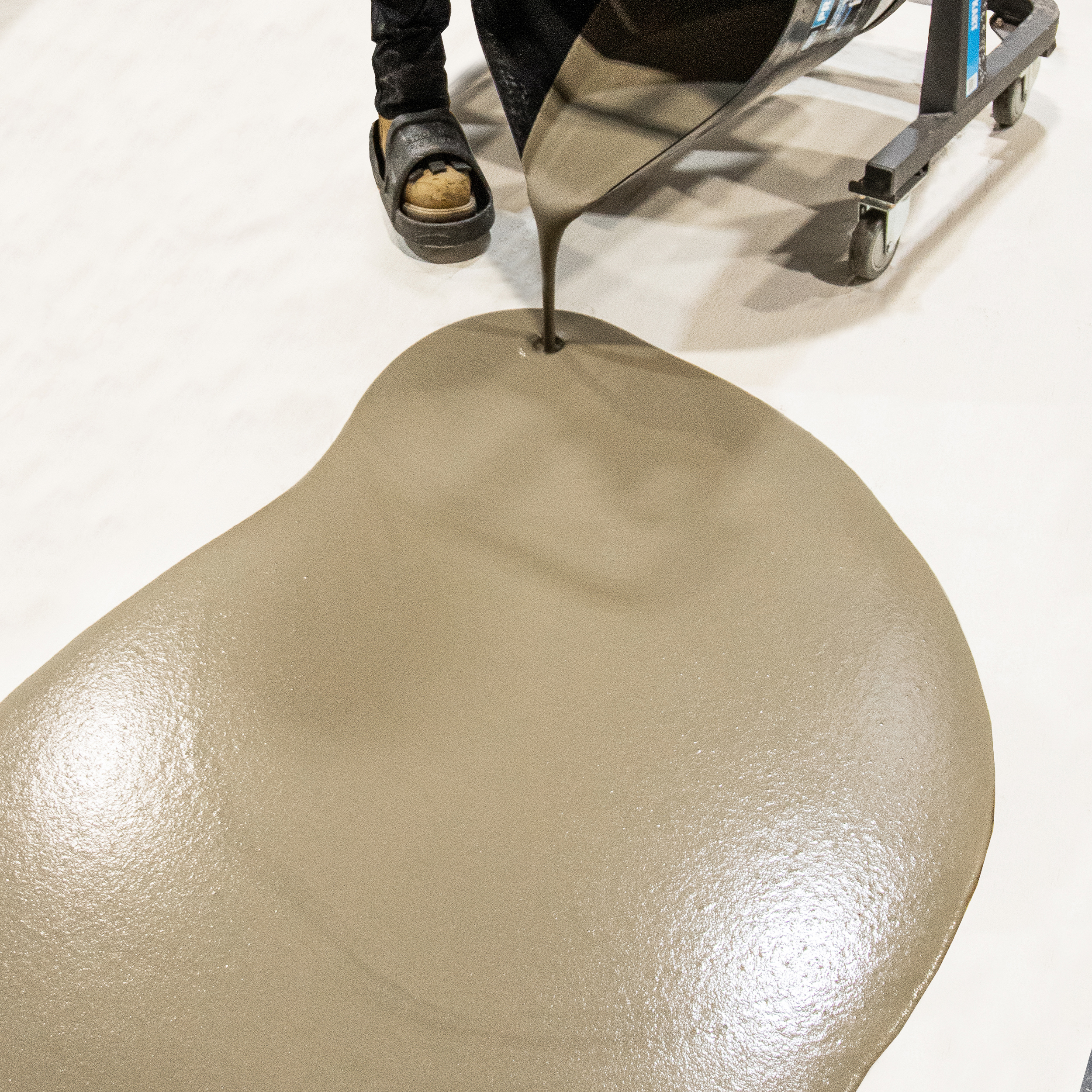
Once the substrate has been properly evaluated and prepared, self-leveling underlayments become a powerful tool for creating a smooth, flat, installation-ready surface.
The LATICRETE NXT® family of self-leveling underlayments was developed specifically to address the challenges encountered on demanding commercial and institutional projects.
Once the substrate has been properly prepared, NXT self-leveling underlayments help create the flat, smooth surfaces required by today's flooring systems.
Managing Moisture Without Guesswork
When moisture test results exceed acceptable limits, LATICRETE moisture mitigation technologies, including VAPOR BAN™ systems, provide proven solutions that help keep projects moving while protecting flooring investments.
Collaboration Is the Key to Successful Type 1L Projects
Successful projects increasingly require collaboration among owners, design professionals, general contractors, ready-mix suppliers, concrete contractors, flooring installers, and manufacturers.
Early communication regarding mix design, curing practices, moisture expectations, and substrate preparation requirements can help reduce surprises later in the project schedule.
The Bottom Line
Type 1L concrete is not a problem. It is simply a different substrate environment that requires a disciplined, performance-based approach.
As the industry continues moving toward lower-carbon concrete technologies, installers should expect continued variation in slab surface characteristics. Successful projects depend on proven evaluation methods, proper surface preparation, accurate moisture testing, and systems designed to perform under real jobsite conditions.