Archive
Tagcloud
Tile Design Details: Color Coordination
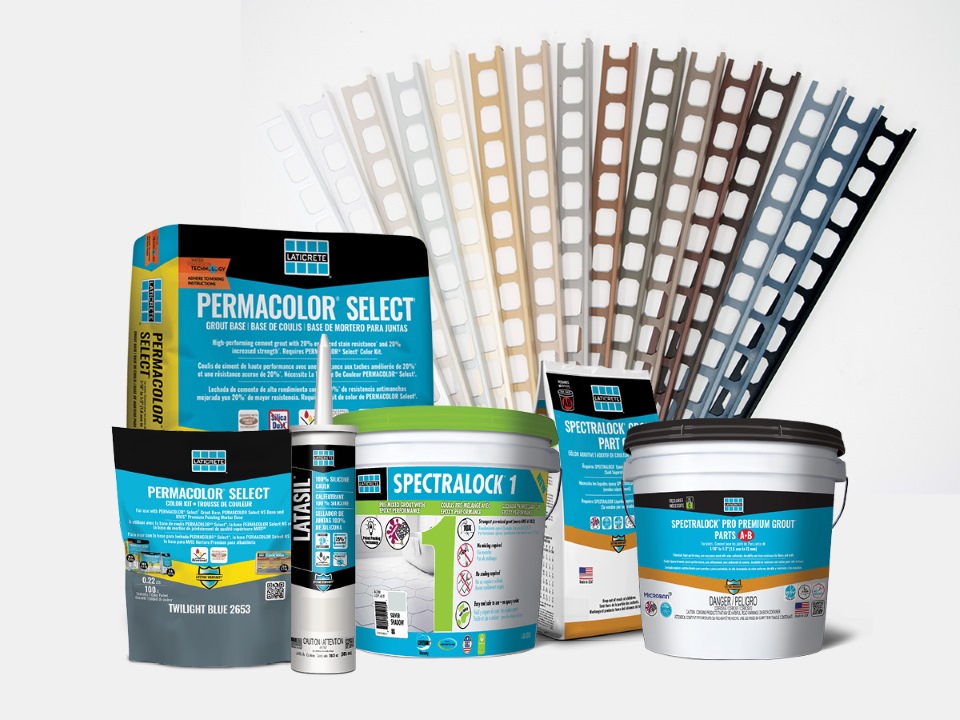
Why Profiles, Trims, Grouts, and Sealants Matter

A new kitchen floor with colorful tiles to coordinate with the cabinets and countertop. A modern, sleek bathroom that is fashioned to feel like a spa. An exquisite mosaic that serves as a piece of art on a high-profile wall in the lobby of a hotel or commercial building.
In each of these instances, color and aesthetics play a significant role. They impact everything from emotion to perception, which makes it vital for designers and architects to pay close attention to how they employ color in a project. Artists, too, understand that even the smallest elements can have a big impact on how a space feels.
With so many options available, curators may ironically face a paradox of choice. Such can be the case when
coordinating the colors
of grouts, sealants, profiles, and trims, the supporting infrastructure of projects made of tile and stone. With the right guidance, virtually any tile design vision is within reach.
The Details: Profile and Trim Colors
Each person’s perception of color can vary from that of another. Not only is this impacted by the relationship between the eyes and the brain, but it can also be influenced by light, reflection, angle, and even our current state of mind. Location can also matter, with identical colors looking different inside than they do outside.
Because colors set the mood for a space, it is important that architects and designers consider the emotions they seek to impart. An energetic feeling would be achieved through bolder, brighter colors, for instance. By contrast, cooler and neutral tones can subdue moods and exhibit tranquility.
Even the smallest details play a role in achieving a desired look. Profiles and trims set the framework for the installation while also enhancing the overall design. They can accentuate or blend with a chosen color scheme. For an elegant, classic look, brass trim elements can be paired with blue tile. More minimalist looks can be achieved by combining matte black profiles and trims with white tile. Both examples exhibit different styles, but also different emotions.
Sealant & Grout Color Combinations: Subtlety or Contrast?

Consistency is key in achieving a desired look. That is why specific consideration should also be given to
sealants
and
grout.
Like profiles and trims, their incorporation can also have a robust impact.
Grouts, for instance, can be used to blend into a tile design or be used as a primary element in a final look. Allison Eden, storied New York-based mosaic artist, incorporates
colored grouts
and sealants in her works to emphasize the emotional impact of her designs. Such use transforms grout from what is ordinarily a utilitarian element to a one that becomes art itself.
“Over the years, I’ve had to mix paint over white grout to get my desired color on all of my samples,” said Eden. “The custom coloring of the PERMACOLOR® Select ANYCOLOR™ grout is my favorite because not only do I not have to do that anymore, my customers are now able to order all of these crazy, unique mixtures that I have custom made thanks to this line.”
A different approach is to blend in with surrounding colors. This is where grouts should be specified in a color that is similar to the color of the tile. This prevents it from being a distraction and serves as a more secondary element to the design. This can contribute to a more “wide open” feeling when used on installations with larger tiles.
For both approaches, manufacturers like LATICRETE offer custom colors for both grouts and sealants. When ordered from a reputable brand, such products can offer unmatched design freedom that is also high on performance.
Installation Strategies For Looks That Last

Seasoned professionals know that every tile installation has its own unique set of challenges. Likewise, there are considerations in installation settings that can have an impact on colors. This is especially true for grout:
Substrate and Tile: Porous materials can draw out moisture from grout, impacting color consistency. Dampening the substrate before grouting helps maintain proper hydration.
Light and Moisture: Shade, sunlight exposure, excess water, or leftover thin-set mortar can all affect final grout color.
To manage these factors, installers should maintain a clean workspace and use materials from consistent batches. Higher-performance ANSI A118.7 grouts are recommended, such as PERMACOLOR®, PERMACOLOR Select, or PERMACOLOR Select NS Grout Base.
A quality sealant should then be used for protection and aesthetics, such as STONETECH® High Gloss Sealer & Finish or STONETECH Semi Gloss Sealer & Finish.
The Big Picture
Designs no longer need to be restrained by a limited color palette. Designers should select profiles, trims, grouts, and sealants as part of an integrated solution. The result: cohesion, performance, and client satisfaction.
To Learn More on LATICRETE Coordinating Colors and Finishes in Grouts, Profiles, Sealants and Drains, Visit laticrete.com/ColorStory